
Plantar Fasciitis Treatment in Bedford, Northampton & Milton Keynes
Prescribing clinician-led treatment for heel pain in Bedford, Northampton & Milton Keynes — matched to the stage of your condition, because heel pain that started three weeks ago needs a different approach to pain that has persisted for months.
Welcoming patients from Bedfordshire, Northampton, Milton Keynes and surrounding areas.
Understanding plantar fasciitis
Plantar fasciitis is one of the most common causes of heel pain. It occurs when the thick band of tissue that runs along the bottom of your foot — the plantar fascia — becomes inflamed or degenerates over time.
The condition typically causes a sharp, stabbing pain in the heel, often worst first thing in the morning or after periods of rest. If you have been living with this pain in Bedford, Northampton, Milton Keynes or the surrounding areas, you are not alone — and the right treatment depends on how long you have been experiencing symptoms.
Pricing
Consultation
£50
Podiatry MSK injection assessment
Treatment
from £250
Plantar fasciitis treatment
An initial consultation is required. The treatment pathway and pricing depend on the duration and nature of your symptoms.
Two treatment pathways, matched to your stage
We do not apply a one-size-fits-all approach. Your treatment is determined by the duration and nature of your symptoms, assessed during your consultation.
Ultrasound-guided corticosteroid injection
For acute plantar fasciitis where symptoms have been present for less than three months, the fascia is typically in an inflammatory state. A precisely targeted corticosteroid injection delivers anti-inflammatory medication directly to the affected area.
- Targets active inflammation
- Ultrasound guided for precision
- Rapid pain relief
- Single appointment procedure
Dry needling + steroid injection
For persistent plantar fasciitis lasting more than three months, the tissue often shifts from inflammation to degeneration. Dry needling provides mechanical stimulation to promote tissue repair, combined with a steroid injection for pain management.
- Addresses chronic tissue degeneration
- Mechanical stimulation + pharmacological support
- Promotes natural healing response
- Followed by rehabilitation advice
How we assess your condition
Clinical diagnosis
Physical examination and symptom history to understand the duration, severity, and impact of your heel pain.
Previous imaging
Any existing MRI, X-ray, or ultrasound reports are reviewed and incorporated into your assessment.
Ultrasound-guided injection
Where injection treatment is appropriate, real-time ultrasound guidance ensures the needle is placed precisely at the target site.
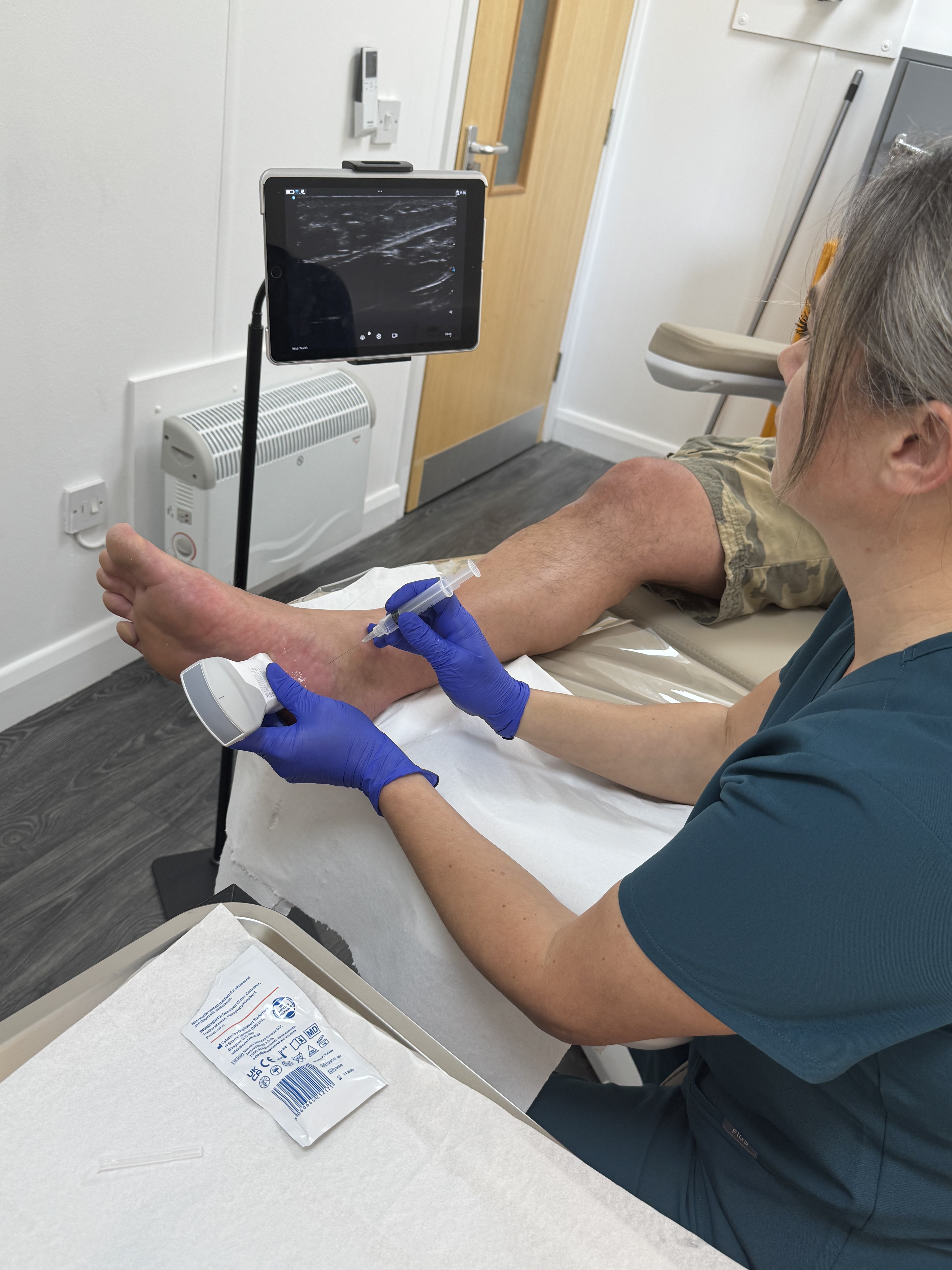
Ultrasound-guided plantar fascia corticosteroid injection — ultrasound screen visible in background
Areas served
The clinic is based in Great Denham, Bedford (Bedfordshire). Patients commonly travel from across Bedfordshire and surrounding counties including:
Related treatments
Ultrasound-guided joint injections in Bedford, Northampton & Milton Keynes
Precision-targeted foot and ankle joint injections
Achilles tendinopathy treatment in Bedford, Northampton & Milton Keynes
Hydrodilation with integrated rehabilitation
Morton's neuroma treatment in Bedford, Northampton & Milton Keynes
Two-stage diagnostic and treatment approach
All podiatry & MSK in Bedford, Northampton & Milton Keynes
View our full range of podiatry services
Stop managing the pain — start treating the cause
If you have been living with heel pain, book a consultation to find out which treatment pathway is right for you.
Book a consultation